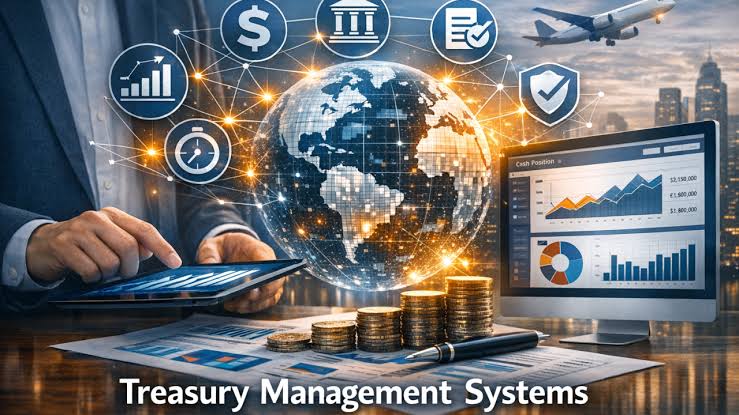
Real-Time Treasury: Understanding Modern Treasury Management for SMEs
Introduction
Due to the growing complexity of business operations across different payment methods, supplier networks, digital platforms, and commercial ecosystems, small and medium-sized companies are forced to make quick decisions, respond to changes in consumer demand, and manage day-to-day financial needs and challenges while ensuring proper cash flow.
In such circumstances, Real-Time Treasury becomes an essential idea for modern business finance. The traditional approach to treasury management was often associated with periodic reports and manual processes. Currently, digital finance, interconnected systems, and financial technologies are reshaping businesses’ attitudes towards financial data.
Thus, for SMEs, treasury management is no longer a privilege of big corporations. Nowadays, entrepreneurs are required to have better insight regarding their cash balances, payment schedules, supplier relationships, and financing needs. Real-Time Treasury refers to a model in which financial data, payment processes, and funding sources are better integrated into business operations.
Understanding the discussed innovation provides SMEs with an opportunity to consider using financial technologies to grow their businesses.
Why Treasury Management Matters for SMEs
Cash Flow Visibility Supports Better Decisions
Cash flow management continues to be among the top concerns for businesspeople. Even when a company is doing well in sales and serving customers, it may face financial problems if its payment cycle does not match its expenditures.
Imagine a wholesale distributor buying goods from its suppliers and selling them to business customers. Its payments to suppliers will be made before it receives payment from its customers, resulting in a working capital shortfall.
Without adequate financial clarity, companies might find themselves in situations where they face:
● Challenges in planning payments
● Late settlement of their suppliers
● Uncertainty about working capital needs
● Inadequate knowledge about future cash needs
Real-time treasury aims to provide greater clarity on all these financial transactions through technology.
Working Capital Gaps Can Affect Business Growth
Growth brings about changes in financial requirements.
As an organization expands into new markets, increases its inventory, or deals with larger clients, it may require additional financial resources before it begins to generate revenue. The role of treasury management gets more significant with growth.
Conventionally, several different systems have been used for:
● Banking transactions
● Accounting data
● Payments management
● Financing decisions
● Supplier interactions
Financial technology is enabling the integration of such fragmented systems.
Real-Time Treasury is one aspect of this greater effort towards business finance integration.
How Real-Time Treasury Connects Financial Activities
From Static Reports to Dynamic Financial Information
Regular updates have usually characterized the traditional treasury function.
Information would be out of date when decisions are being made.
However, in Real-Time Treasury, there is a different scenario where businesses get more up-to-date information concerning:
• Available liquidity
• Expected receipts
• Payable amounts to suppliers
• Financings
• Cash flow
The problem here is that not all companies need highly developed treasury management systems. What SMEs may require is better financial information.
An example may be a service company handling multiple projects simultaneously and needing to track client payments, employee costs, and payments to suppliers.
The Role of Digital Finance
Finance is changing due to digitalization.
It has become common practice for companies to employ:
● Digital payment methods
● Accounting programs
● Programs for business management
● Financial apps
This integration process transforms treasury management from an additional function into an integral part of the business.
The emergence of Real-Time Treasury proves this.
Financial Solutions That Support Treasury Management
Treasury management is closely linked to financing solutions that help businesses manage timing differences between expenses and revenue.
Invoice Financing
The invoice financing system is related to unpaid customer invoices.
A company that delivers goods and services may require operational management even without receiving payment from customers. One option to consider is invoice financing.
The treasury visibility system allows companies to know:
● What customer invoices are outstanding
● When the payments will be received
● How financing relates to the operations
Trade Finance
Trade finance facilitates business transactions among suppliers, buyers, distributors, and other entities in the trade chain.
Entities involved in supply chains require harmonizing payment terms and managing their financial dealings with each other.
The Real-Time Treasury can help improve visibility across these business processes by integrating financial information into a more connected world.
Embedded Finance
Embedded finance involves embedding financial services in a company’s platform.
For instance, payments, finance, and financial information can be embedded in software already used by the company.
Embedded finance is becoming more important because it involves financial transactions conducted in proximity to operational processes.
Alternative Lending
Alternative lending platforms employ technology-driven means to assist financing operations.
Companies can experience digital tools, online documentation management, and technology-enabled evaluations.
Finance and treasury management operations will be more closely linked when companies better understand their financial situation and operational needs.
The Role of AI and Open Finance in Real-Time Treasury
AI Risk Assessment and Financial Analysis
More and more artificial intelligence applications find their way into the finance industry.
AI may help in:
● Processing of information
● Analysis of transactions
● Discovery of patterns
● Workflow automation
In treasury operations, AI may help companies and financial organizations process information more efficiently.
Nevertheless, financial decisions still require knowledge about specific business conditions and personal considerations.
Technology facilitates decision-making but cannot substitute business sense.
Open Finance and Connected Financial Ecosystems
Open finance focuses on enhancing connectivity across financial services and digital apps.
A firm may employ the following:
● Accounting software
● Payment systems
● Banking services
● Management systems
Increased connectivity can help businesses access better financial information.
Real-Time Treasury is born of this broader shift towards a connected financial ecosystem.
This can provide SMEs an opportunity to handle their financial activities through improved workflow.
Practical Considerations for SMEs
Organizations that want to enhance their treasury management need to start by knowing their organization. Some helpful questions are:
- At what times do the clients pay?
- What are the primary supplier liabilities?
- How frequent are the gaps in the working capital?
- What financial systems are being used right now?
- How is financial information shared within the business? Treasury management does not revolve solely around technological processes.
The other aspects are:
● Proper accounting
● Proper payment procedures
● Efficient cash flow management
● Understanding financing requirements
● Visibility across operations.
Growing organizations usually find it beneficial to improve their financial knowledge together with growing operations.
Conclusion
Real-Time Treasury reflects the broader transformation taking place across business finance. As companies operate within increasingly digital and connected environments, financial visibility becomes an important part of managing growth, working capital, and daily operations.
Invoice financing, trade finance, embedded finance, alternative lending, and digital finance are contributing to more integrated financial ecosystems. Technology is changing how businesses understand and manage financial information, but sound business judgment and responsible planning remain essential.